Browsing articles in "Techniques"

Making Cell Phone Cases With Syil, Fadal, and G-Wizard

May 16, 2013   //   by Bob Warfield   //   Blog, FeedsSpeeds, Techniques  //  3 Comments
CellPhoneCaseMold1

Got a nice note with pictures the other day from a G-Wizard customer.  He’s making molds for cell phone cases and started out on his Syil X6 before moving to a Fadal 4020 VMC.  As a result, we get to see some pictures of roughly the same part in comparison:

The Syil Version…

The Fadal Version…
Actually, they’re top and bottom mold halves, I believe.  The Syil doesn’t look too bad, though he definitely gets a little better finish on the Fadal.  His main remark about the Syil was some vibration marks on the walls aligned with the Y-axis.  … Read the rest

Should We Focus on Reducing Setup Time or Cycle Time?

May 10, 2013   //   by Bob Warfield   //   Blog, Techniques  //  No Comments

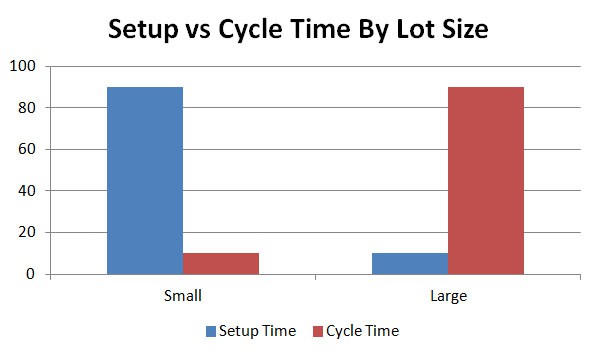
I just added a new article in the CNC Machining and Manufacturing Cookbook on the tradeoffs between Setup Time and Cycle Time.

What are the tradeoffs between a Touchsetter on the machine and offline Toolsetting?
The article discusses issues like whether a Tool Touchsetter on the machine or offline Toolsetting is more advantageous.  One reduces Cycle Time while the other reduces Setup Time.  Knowing which one your shop should focus on first is very important to maximizing your overall shop productivity.… Read the rest

Introduction to CNC Machining Productivity

May 6, 2013   //   by Bob Warfield   //   Blog, Business, Techniques  //  No Comments

I just uploaded a new installment on our CNC Machining and Manufacturing Cookbook.  This is an introduction and overview on how to think about CNC Machine Shop Productivity by analyzing the overall Workflow in the shop.  It’s based on our CNC Manufacturing Workflow (as is the rest of the Cookbook):

One of the key things in this new installment is an Excel worksheet for tracking shop costs that you can use to begin to analyze your shop’s productivity and cost structure, and to track improvements in various parts of the Workflow.… Read the rest

Introducing Our CNC Machining and Manufacturing Cookbook

May 2, 2013   //   by Bob Warfield   //   Blog, Business, Techniques  //  1 Comment

Something I hear constantly from CNCCookbook visitors is some sort of exclamation about how much information can be found here.  There truly is a tremendous amount of information–literally a couple thousand pages of it.  Some of it is in the Blog area, where it can be accessed chronologically (not especially helpful except to stay current), by Category (see the list on the lower left column), or by Search.  The blog comprises nearly 600 posts, so the majority of the site is still in the form of regular web pages.  You can visit those pages using the menu above to drill down to the information you’re looking for:
-  Software:  These are the home pages for our G-Wizard Software and all that goes with that.… Read the rest

CNC 4th Axis Basics: Routers and Woodworking

Apr 30, 2013   //   by Bob Warfield   //   Blog, CNC Router, Techniques  //  1 Comment
4th-axis_large

This is the 4th part of our 4th Axis Basic Series and it covers the use of a 4th axis for a CNC Router and when woodworking.
For the most part, the principals of 4th Axis use with a CNC Router on wood are much the same as the more metal-focused articles that have come before.  You can mount a typical 4th axis on a router table and go to town:

The goal of 4th axis woodworking is typically engraving or columns…
The goals of 4th Axis woodworking are often a little different.  … Read the rest

CNC 4th Axis Basics: Workholding

Apr 23, 2013   //   by Bob Warfield   //   Blog, Techniques  //  No Comments

This is the 3rd part of our series on 4th Axis Machining.  In this post, we’ll talk about workholding and the 4th Axis.
It should come as no surprise that 4th Axis workholding is pretty similar to workholding on a plain old mill table.  Heck, many Horizontal Mills don’t have anything but a palletized 4th Axis Tombstone as their “table”.  So, we’ll work through the workholding options and they’ll seem pretty familiar.  I’m going to order them for familiarity relative to the table, rather than necessarily based on how often each one is used.  … Read the rest

Machining a Titanium AR-15 Lower Receiver on a Hobby Mill

Apr 15, 2013   //   by Bob Warfield   //   Blog, CNC Projects, Cool, FeedsSpeeds, Software, Techniques  //  4 Comments

We featured Kingjamez’ video on making an aluminum AR-15 lower receiver on a small hobby mill (Sieg X3) quite a while back.  He used our G-Wizard Feeds and Speeds successfully, and I was tickled to get a note from him recently about his use of G-Wizard for this project:
Just wanted to write and say thanks for GWizard. I’m a hobbiest (you featured my youtube video of my CNC’d AR-15 a couple years ago) and have a tiny CNC Mill, but thanks to GWizard my first efforts at machining 6AL-4V titanium went flawlessly.… Read the rest

CNC 4th Axis Basics: How They Work

Apr 13, 2013   //   by Bob Warfield   //   Blog, Products, Techniques  //  1 Comment

This is the second installment of a series on 4th Axis Milling.  The first talked about why you’d use a 4th Axis.  In this post, I want to talk a little bit about the mechanics of how they work and what’s inside one.  We have a lot of readers who are interested in the details and even in building their own 4th axis.
To create a 4th Axis basically requires that the axis be well mounted so it can spin, and that there be some means of controlling that spin via g-code program, preferably with as little backlash as possible–backlash is the enemy of CNC.  … Read the rest

4th Axis Chain Hoist

Apr 11, 2013   //   by Bob Warfield   //   Blog, CNC Projects, Techniques  //  No Comments
4thAxisHoist

Speaking of 4th Axes, even a small one can be a real back-breaker to move on and off your mill table.  Larger ones are pretty near impossible to do by hand, especially bending forward to get inside your machine enclosure.
The answer is to set up a chain hoist or other aid.  Here’s one I just came across on Tormach’s blog that’s pretty slick:

In my own shop, I’ve got a gantry crane that sits over top of the enclosure to make moving things on and off-table quick and easy.
Here’s another approach I’ve seen in a couple places:

I’ve also seen shops put an articulated arm like the vise caddy above on a post that’s been bolted to the floor outside the door of their VMC.  … Read the rest

CNC 4th Axis Basics: What They Can Do

Apr 8, 2013   //   by Bob Warfield   //   Beginner, Blog, Techniques  //  8 Comments
HA5C-First-Model

4th Axis machining is an interesting and important sub-part of the CNC milling world.  Haas actually got it’s start building a 4th axis before it ever built entire CNC machines (pictured on the right).  This is an article series to help beginners understand how and why a 4th Axis is used on CNC Mills.  In the first installment, we’ll look at what a 4th axis is used for.  In the second, we’ll look at how they work.
If you’re new to CNC, your first impression may be that the 4th axis is used in the same way a rotary table is used for manual machining.  … Read the rest

You Can’t Find Optimal Feeds and Speeds in Charts, Handbooks, or the Seat of Your Pants

Apr 3, 2013   //   by Bob Warfield   //   Blog, Business, CNC Router, FeedsSpeeds, Techniques  //  No Comments
buttoncutters

I see a lot of interesting discussions about feeds and speeds out on the Internet.  There are people that think you can get good feeds and speeds just by reading manufacturer’s charts, by ear, from their CAM program, and through a whole host of other shortcuts.  Some say they’ve had enough experience as machinists that they just know the best feeds and speeds.  Or, they may say their shop only does a few materials and they’ve learned them by trial and error.  I’ve heard in the same breath that tooling manufacturers don’t test near enough variables to have complete data but that an individual machinist can accumulate enough knowledge through trial and error to come out with near optimal feeds and speeds for all the situations that they encounter.… Read the rest

3D Printing 101: Part 1: 3D Printer Basics

Mar 25, 2013   //   by Michael Hackney   //   3D Printing, Beginner, Blog, Guest-Post, Techniques  //  4 Comments

Since the CNCCookbook Blog is frequented by CNC machinists, I thought it would be useful to provide an overview on 3D printing from the perspective of someone familiar with CNC machining. I have four parts planned, and in this first part I’ll present a little history, describe why I (and many others) believe 3D printing is here to stay, discuss some terminology, and generally set the stage for future posts in the 3D Printing 101 series:
3D Printing 101: Part 1: 3D Printer Basics
3D Printing 101: Part 2: Mechanics
3D Printing 101: Part 3: Electronics
3D Printing 101: Part 4: Software
So, let’s get started!… Read the rest

New Conversational CNC Face Milling and Surfacing Wizard

Mar 19, 2013   //   by SiteOwner   //   Blog, FeedsSpeeds, GCode, Software, Techniques  //  2 Comments
Face Milling and Surfacing CNC Wizard

I just uploaded G-Wizard Editor version 1.018, which has our new Conversational CNC Face Milling and Surfacing Wizard.  Here’s what it looks like:
The Surfacing Wizard includes three different toolpaths:
-  Zig-zag:  Fastest surfacing, because it cuts both ways.
-  Climb Mill:  Best surface finish–passes are climb mill and then rapid back so they always cut in the same direction.
-  Radial:  This path spirals outward, and is a nice compromise between the two as well as a good choice for surfacing round areas.
We’ve spent a lot of time incorporating state-of-the-art face milling toolpath features, such as the way the tool arcs into the workpiece.  … Read the rest

What Now: My CNC Won’t Go Slow Enough or Fast Enough?

Mar 15, 2013   //   by Bob Warfield   //   Beginner, Blog, CNC Router, Software, Techniques  //  No Comments
594037_Donkey_cart

It takes a complex bunch of math to properly calculate Feeds and Speeds under all conditions and to get anywhere close to good answers.  There is a whole lot more to it than the basic equations everyone learns that claim to relate surface speed, chipload, rpms, feedrates and the like.  Unfortunately, those equations work reasonably well for manual machining (though you can still do much better with proper calculations), but they can be way off for typical CNC operations.  When I first started out, I was using an Excel spreadsheet to keep up with it all.  … Read the rest

Clean Up Your G-Code Modes!

Mar 13, 2013   //   by Bob Warfield   //   Blog, GCode, Techniques  //  No Comments
G-Code Modal Data

Any parent raising a teenager knows there is a constant refrain from the parents to the teenager to, “Clean up your clothes/junk/whatever!”  Things are left wherever they were dropped and it takes a concerted effort to bring any order to this chaos.
So it is with g-code subprograms and the matter of modes too.  When you call a subprogram, it would be nice if the subprogram left all of the modes intact that were there when it was called.  If you were using G01 when you called the subprogram, it is an accident waiting to happen if it comes back having left G00 operative.  … Read the rest

Pages:1234567...15»

Home

Software

  GW Calculator

  GW Editor

  Gearotic

  Conversational

  Deals and Steals

CNC Blog

  Software

  Techniques

  Beginner

  Cool

  Projects


Cookbooks

     Feeds and Speeds

     G-Code Tutorial

CNC Projects

CNC Machines

     Lathe: Soon!

     Mill: Soon!

     Router: Soon!

     Plasma Table

     3D Printer: Soon!

     Welding

     Other Machines

Resources

     Machinist's Search

     Videos

     Online Groups

     Individuals

     Reference Data

     Books

     CNC Dictionary

     Suppliers

     Tool Brands

Workshop

     Hall of Fame

     Organization: Soon!


About

     Customers

     Partners

     Our History

     Privacy Policy

 
All material © 2010-2012, CNCCookbook, Inc.